Media operations names the boundary.
Owners, rights, decision scope, release gates, and exception paths come before interface labels.
Company origin
The file usually survived. Its owner, current version, review scope, and destination evidence did not. MediaSynd began as an internal operating system for keeping those records together.
The first useful record
Early workflow maps followed a familiar failure: a producer replaced the master, a reviewer had approved the prior crop, and a delivery folder no longer explained which decision it carried. The answer was not another activity feed. It was a source record with durable lineage.
Assets, Studio, Preview, and Delivery became separate workspaces because library owners, production operators, external reviewers, and delivery operators should not share the same authority.
Why the product stays split
The source owner, preset owner, decision owner, and delivery operator need shared IDs—but different controls, evidence, and access.
How the team works
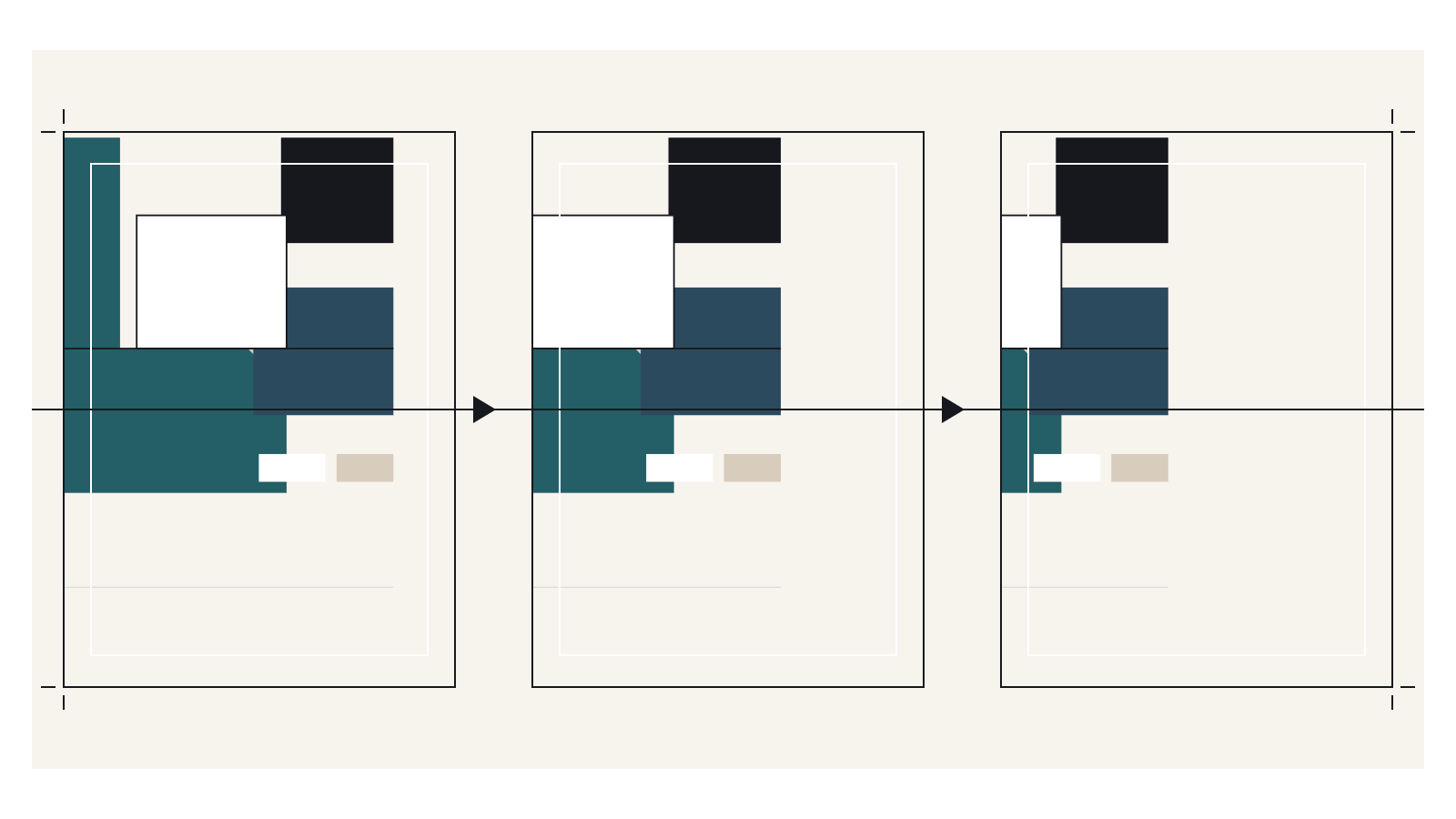
Media operations, workflow design, interface engineering, and content systems share one record model. Current work focuses on replacement impact, exception clarity, and stronger handoff evidence—not unannounced automation.
Owners, rights, decision scope, release gates, and exception paths come before interface labels.
A state is useful only when the next permitted action and responsible role are clear.
Public examples change browser state without claiming to save, approve, upload, or deliver.
Filenames, IDs, roles, and statuses are checked across every workspace before copy ships.
Product boundaries
Inspect how shared IDs support continuity without collapsing four responsibilities into one screen.